


Precious Metals in Luxury Technology: The Foundation of Modern Prestige
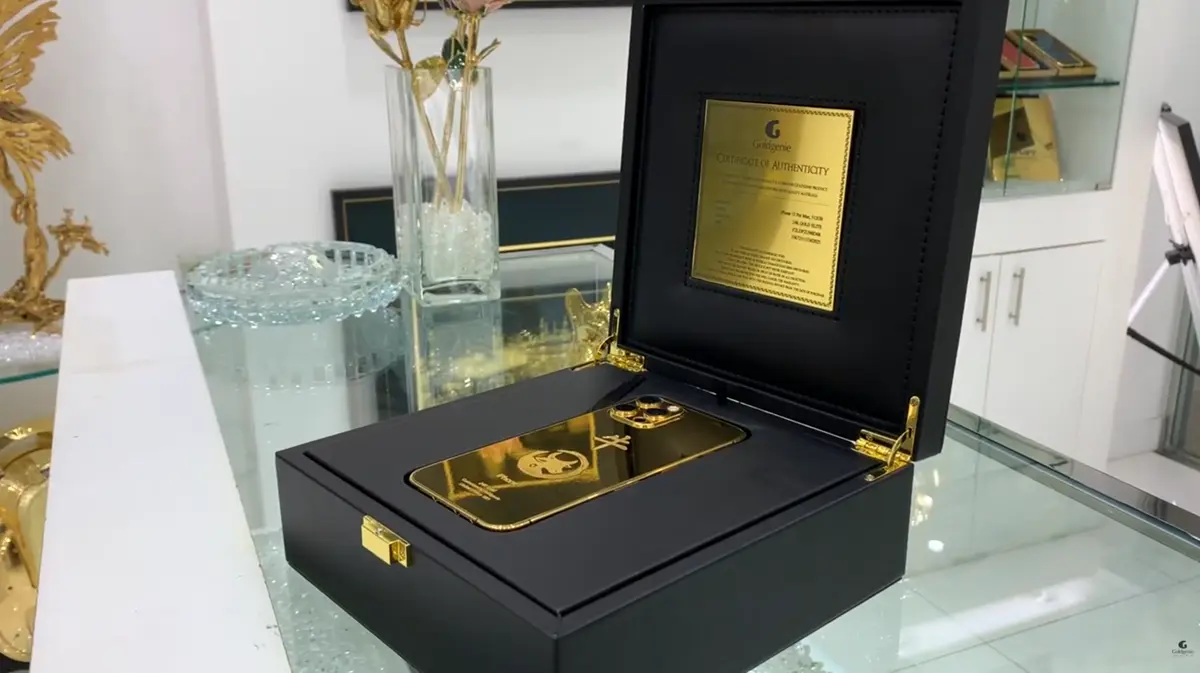
Luxury technology begins with material.
Before software ecosystems, camera specifications and processor speed, luxury has always been defined by substance — by what something is made from, not merely what it does.
In the world of luxury phones, precious metals are not decoration. They are the structural foundation of the category. Gold, platinum and refined alloys transform mass-produced technology into something permanent, tactile and culturally significant.
This article forms part of our broader authority guide to the sector. For a full overview of the category, see our pillar resource:
Luxury Phones: Craftsmanship, Heritage & Modern Prestige
https://goldgenie.com/luxury-phones/
The Role of Precious Metals in Defining Luxury
Across centuries, luxury has been measured by material rarity.
Gold has functioned as:
- Currency
- Symbol of sovereignty
- Store of value
- Ceremonial material
- Architectural detail
When applied to modern devices such as a 24K gold iPhone, the symbolism is not accidental. It continues a lineage of material significance.
Precious metals introduce:
- Weight
- Visual depth
- Reflective character
- Surface permanence
- Intrinsic value
Luxury phones are defined by these qualities.
From Decorative Surface to Structural Identity
There is an important distinction between decorative enhancement and structural precious metal finishing.
Decorative approaches:
- Apply thin cosmetic layers
- Focus primarily on visual novelty
- Prioritise speed over longevity
True luxury finishing:
- Begins with surface deconstruction
- Involves precise electroplating techniques
- Maintains thickness standards
- Concludes with hand polishing
- Undergoes inspection for uniformity
A properly finished 24K gold iPhone becomes a material object first, and a device second.
Why Gold Remains the Dominant Luxury Metal
Gold continues to define luxury phones for three reasons:
Purity
24K gold represents maximum purity. It carries historic and cultural weight.
Stability
Gold does not corrode in the way other metals do. It maintains surface integrity when properly bonded.
Universality
From Europe to Asia to the Middle East, gold signals prestige consistently across cultures.
In luxury technology, that universality matters.
The Intersection of Craftsmanship and Technology
Modern smartphones are precision-engineered.
Applying precious metal to such devices requires:
- Controlled environmental conditions
- Precision voltage management
- Measured bonding times
- Surface calibration
- Skilled finishing
This intersection between advanced engineering and artisan technique defines the modern luxury gold iPhone category.
Founded in 1995, Goldgenie pioneered the principle that communication devices could be treated with the same reverence as fine watches or jewellery. That philosophy helped establish precious metal technology as a legitimate luxury sector.
Luxury Phones as Material Statements
A luxury phone communicates something specific:
- Permanence in a disposable world
- Appreciation of craftsmanship
- Preference for substance over trend
Unlike seasonal fashion accessories, precious metal devices are often maintained, refurbished and preserved.
The metal retains value.
The finish retains identity.
Beyond Aesthetic — Intrinsic Value
There is a practical dimension to precious metals.
Gold carries intrinsic commodity value. While the device’s electronic components evolve over time, the precious metal retains measurable worth.
This duality is unique to luxury phones:
- Technological function
- Material store of value
Few categories combine both.
Historical Context: Why 1995 Matters
The mid-1990s marked the transition of mobile devices from novelty to necessity.
At that point, the concept of enhancing phones with precious metals was unconventional. It required both technical innovation and market education.
By introducing precious metal finishing in 1995, Goldgenie helped shape a new category — one where craftsmanship met communication.
Over successive generations of devices, that principle matured into what we now recognise as the luxury phone sector.
Material Integrity vs Disposable Culture
Contemporary technology cycles encourage replacement.
Luxury phones operate differently.
They introduce:
- Refinement
- Maintenance
- Personalisation
- Longevity
A 24K gold iPhone is less likely to be discarded impulsively. The material presence alters the relationship between owner and object.
Luxury is not defined by rapid replacement.
It is defined by sustained appreciation.
The Engineering of Precious Metal Finishing
Proper precious metal finishing involves:
- Surface preparation
- Degreasing and cleaning
- Base metal bonding
- Gold electroplating
- Thickness measurement
- Hand polishing
- Final inspection
Each stage influences durability.
Without precision, gold can appear uneven or degrade prematurely. With precision, it achieves brilliance and stability.
This process underpins the credibility of luxury gold phones.
Precious Metals and Cultural Continuity
Gold has been associated with:
- Royal regalia
- Ceremonial artefacts
- Architectural detailing
- Religious symbolism
- Investment holdings
When applied to a modern smartphone, the material bridges centuries of symbolic meaning.
Luxury phones therefore occupy a rare intersection:
Ancient material heritage
Modern digital communication
That continuity is powerful.
The Future of Precious Metal Technology
As sustainability and ethical sourcing become increasingly relevant, luxury technology will evolve to incorporate:
Responsible gold sourcing
• Controlled finishing environments
• Extended product life cycles
• Limited artisan production
Yet the foundation remains unchanged:
Material defines luxury.
Precious metals will continue to underpin the highest tier of modern communication devices.


